
In today’s fast-paced world, digital technology and disruptive design is rapidly changing the way we work, from enabling informed decisions earlier in the project life cycle to increasing efficiencies and productivity in operations while reducing variability across the value chain. Digital Project Delivery (DPD) leverages common data, integrated tools, and advanced workflows, which when applied with sound engineering, project, and construction management principles offers value to clients looking to maximize the success of their investments. Civil and Utilities Infrastructure can leverage the power of DPD, enabled by information management and the use of digital technologies. DPD allows clients to gain greater visibility into their project’s performance, improving decision-making through real-time data analysis, and enhancing collaboration and communication among project stakeholders. These capabilities help mitigate risks, optimize resources, and ultimately achieve our clients’ desired return on investment. Additionally, DPD can facilitate more efficient and cost-effective project execution, enabling clients to achieve greater operational efficiencies and profitability.
Delivering complex projects safely, on time, and within budget requires accurate monitoring, forecasting, and management in each stage of engineering, procurement,construction, commissioning, and operations. This is especially challenging with new technologies, complex facilities, specialized construction, and large projects where there is pressure for invested capital to generate a quick return; integration and coordination between executing functions is challenging and requires the right know-how, experience, and tools.
Fundamental Concepts

Data & Standards

People & Skills
Tools & technology

Policies & processes
Digital Services
- Model Authoring
- Model & Process Standardization (ISO 19650)
- Model Health Check - Validation & Compliance Report Library Creation
- COBie
- Automated & ISO 19650 Configured QA/QC
- Quantity Take-off
- Interface Management
- Design Visualization
- GIS Data & Database Solutions
- Spatial Analysis, Modeling & Data Mapping
- Remote Sensing & GIS Applications
- Discipline Coordination & Design Collaboration
- Efficient Data Management
- Geographic Data Visualization
- Analysis of Spatial Relationships & Clash Resolution
Our Process
Productivity, innovation and learning are empowered by robust processes. We have long been at the forefront of industry in developing and improving the processes required for digital working, collaboration and information management, and for the development of digital solutions.
Our Agile Process Includes
Our Digital Awareness

AI KELIX
KELIX consolidates disparate unstructured data sources into a single, cohesive platform, enabling users to access and analyze information with ease.
By leveraging AI-driven insights, KELIX accelerates the knowledge discovery process, allowing users to uncover valuable information swiftly and efficiently.
KELIX enhances compliance efforts by automating data aggregation and documentation processes, ensuring that all relevant regulations and standards are met consistently.
KELIX significantly reduces the time required for deliverable assessments, enabling quicker project turnaround and improved productivity.

Research & Development
Enabling digital transformation by automating workflows and elevating delivery excellence DPD R&D focuses on developing and optimizing automated workflows to enhance efficiency, accuracy, and consistency across infrastructure projects.
By leveraging advanced digital tools and data-driven processes, it drives delivery excellence, reduces manual intervention, and enables scalable, repeatable project outcomes.

Client Directory
A centralized repository of client standards and project-tailored templates enabling consistency and agility.
A centralized repository of client standards and project-tailored templates, ensuring consistency, compliance, and efficiency across infrastructure projects. It enables teams to quickly access approved guidelines and adaptable templates, streamlining design workflows and supporting accurate, scalable project delivery.
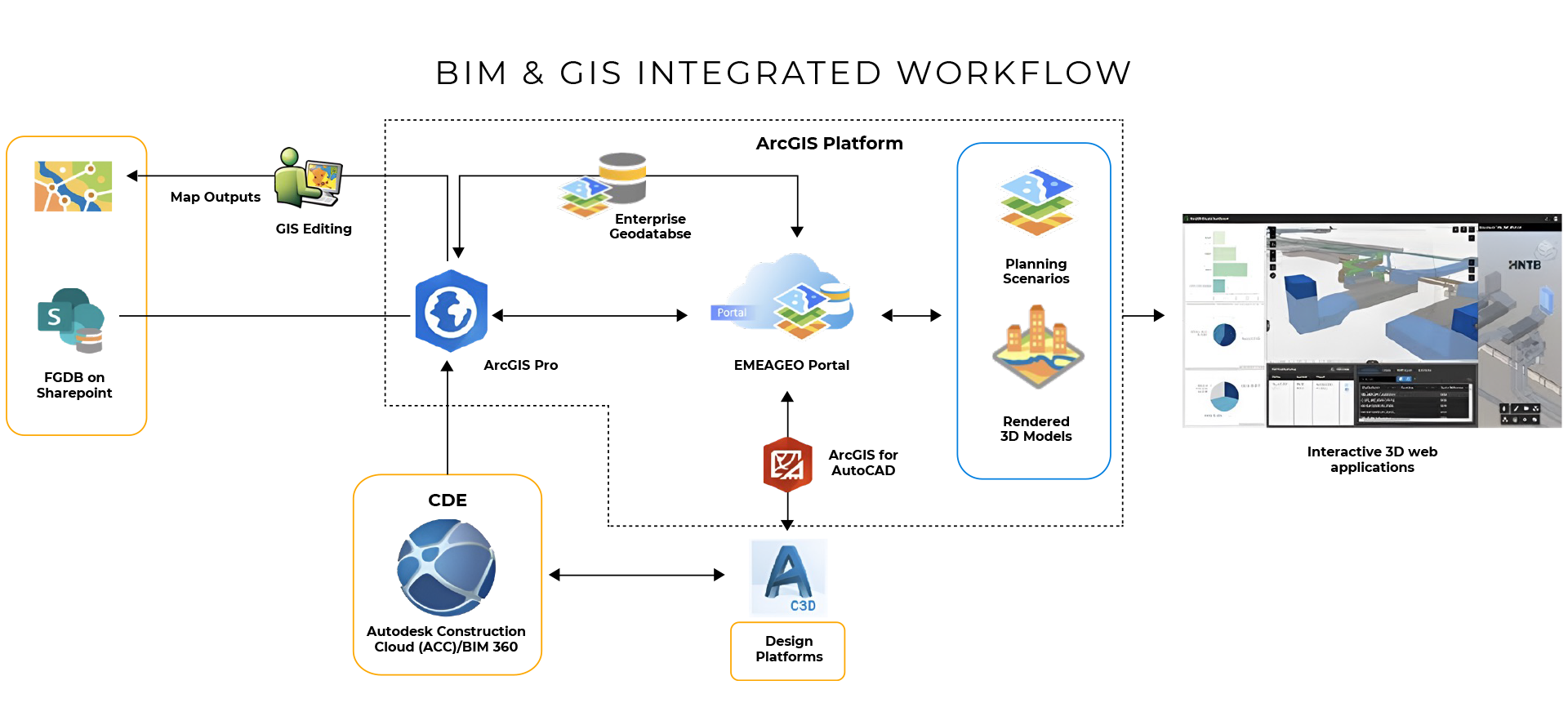
Integrating BIM & GIS for Smarter Planning and Project Insights
- Integrated GIS and BIM workflows - to facilitate a data driven approach to project life cycle management
- Integration of ArcGIS mapping platform with Autodesk design platform - to enable seamless exchange of data between BIM and GIS
- Easy access to geospatial information along with addition of location and context awareness to the design process
- Availability of Design models enriched with location and context – to transform proposed asset to a complete digital twin, a virtual construction model
- Improved coordination and collaboration
- Increases in project resiliency and reduction in total construction cost
- Eases permitting and preliminary design with spatial information organized for analysis and decision making
Embedding BIM, GIS & Digital Twin Principles from day one

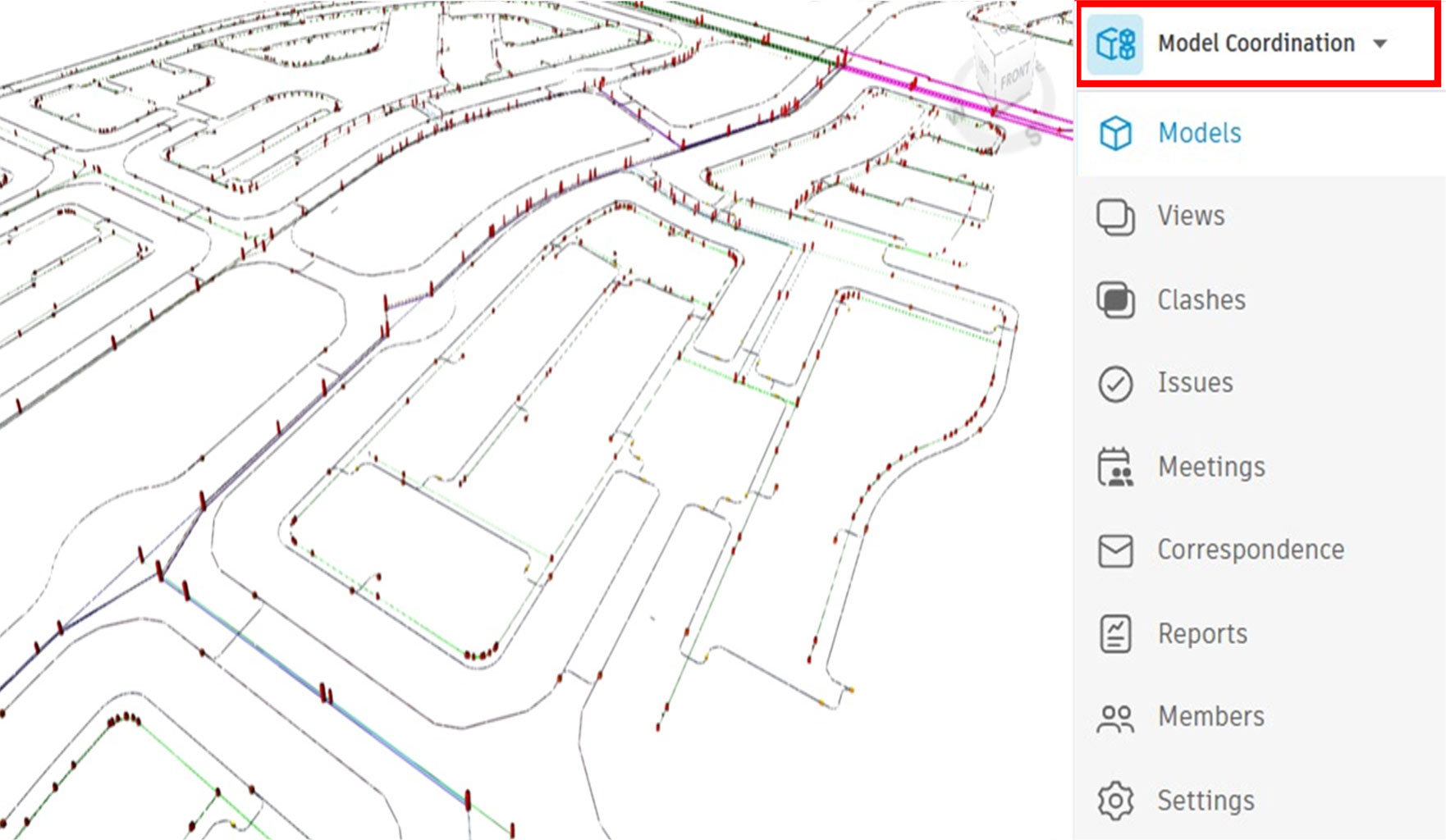
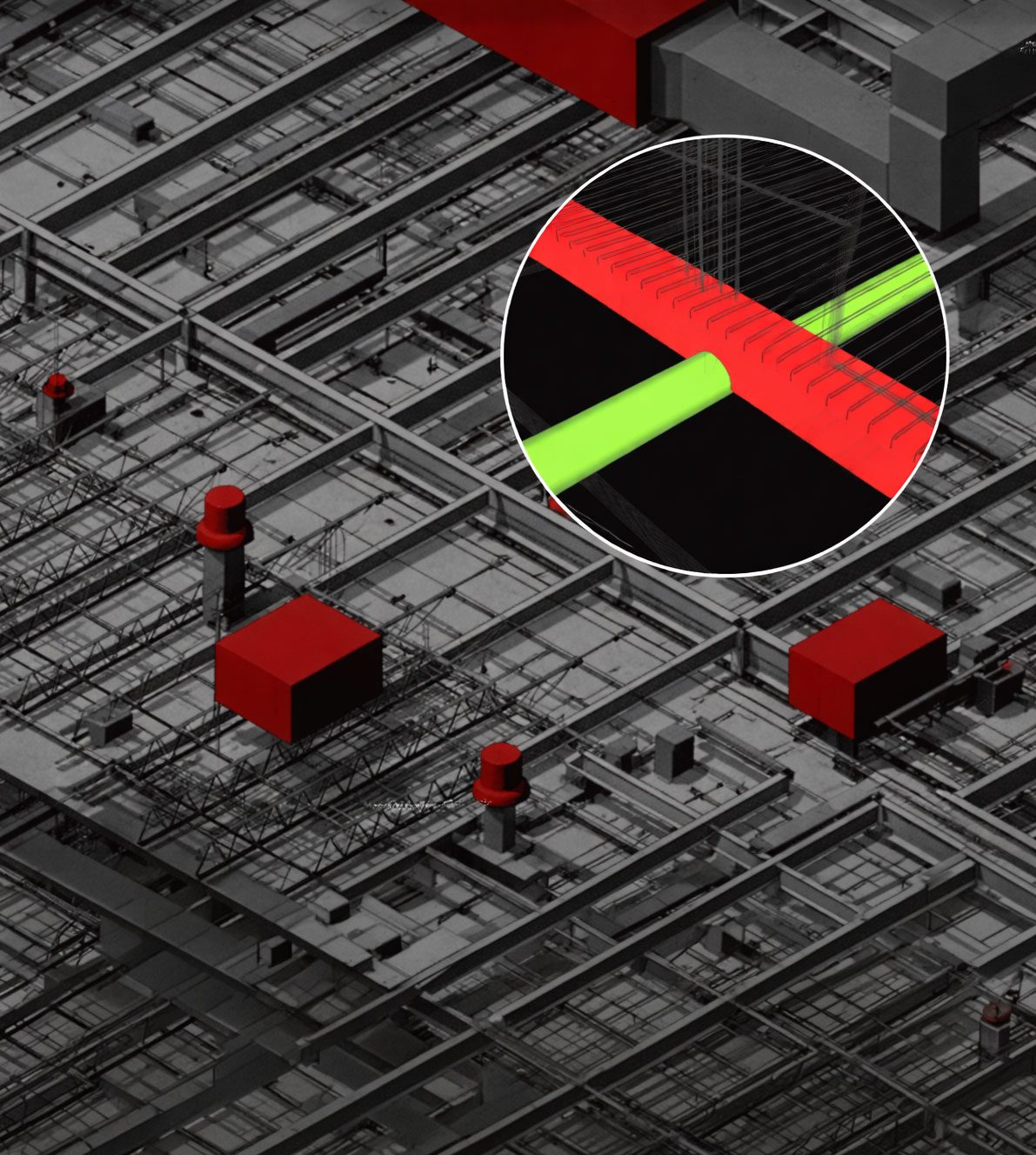
GeoBIM Clash Detection
- Layout/design optimization
- 5D BIM Integration and Overall project cost reduction
- Enhancement in constructability & operational efficiency
4D BIM, Construction Sequencing
- Virtual representative of the construction process
- Safer design & construction process
- Minimize costly remedial work
- Optimize space usage
Digital Twin
- Where BIM is not designed for real-time operation, a digital twin is the next evolutionary step of BIM
- A digital twin can be continuously updated with big data from multiple sources, enabling improved testing of what-if scenarios, analysis of the interdependency of multiple systems and simulation of risks and vulnerabilities—all toward the development of the asset’s resilience
- Asset monitoring & maintenance
- Data driven decision making
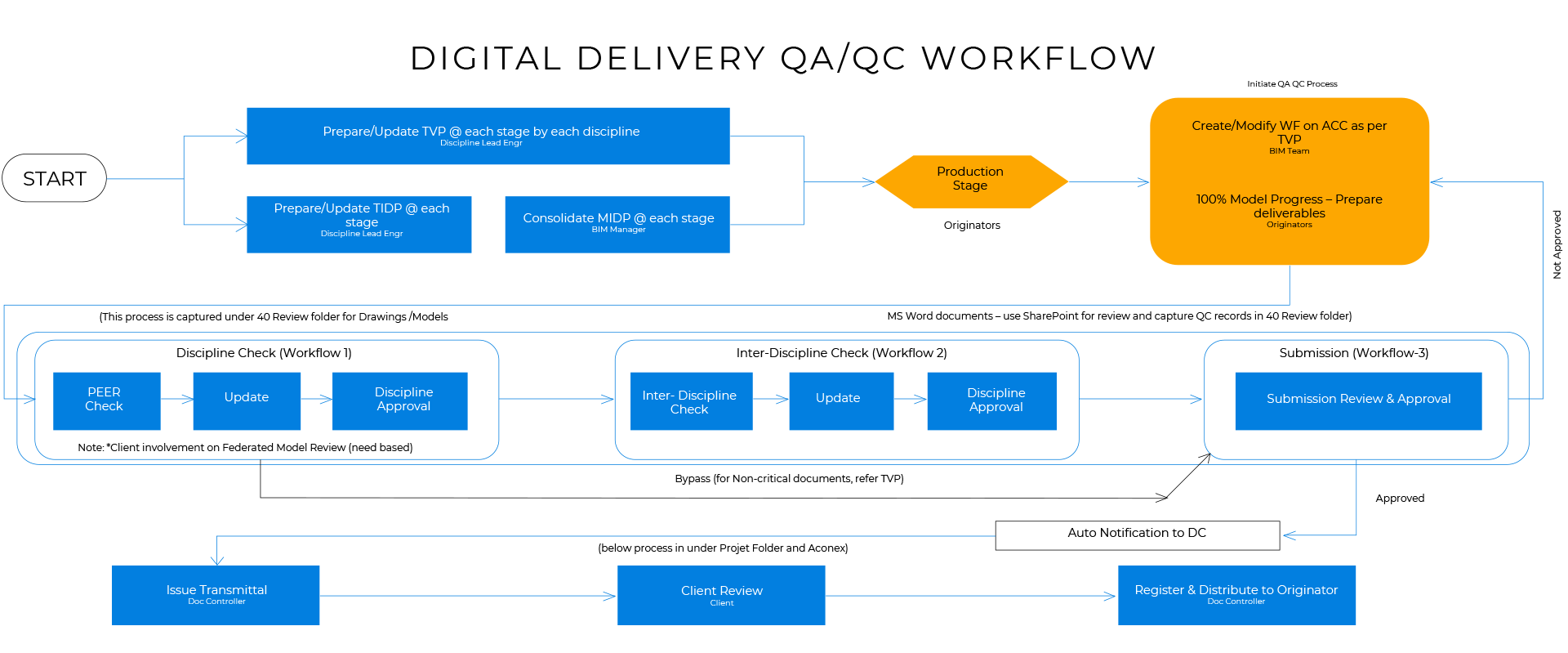
Driving Efficient Project Delivery Through ISO 19650-Aligned QA/QC Process
Internal Clash Detection
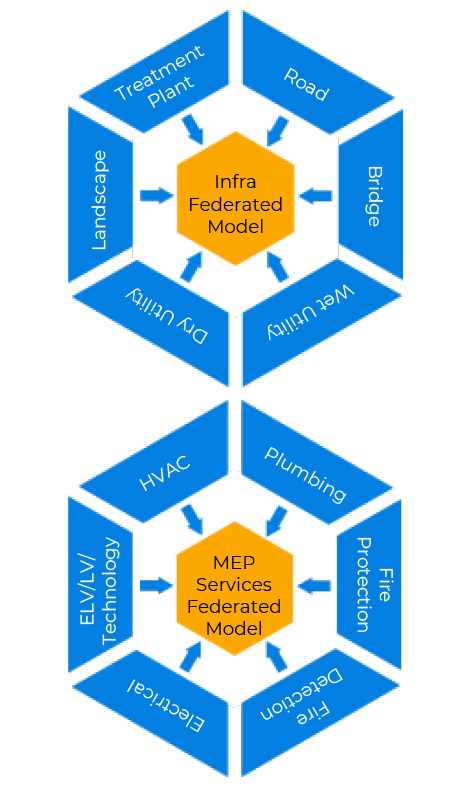
Our BIM Coordinators will extract NWC files for systems which will be used for Federated Model development and internal coordination. This will expedite coordination at an overall BIM Model level whilst enabling on-going coordination and clash detection across all disciplines.
The Services Systems will be coordinated continuously during design and delivery phases through the use of our phase specific clash matrix.
Drawing Coordination
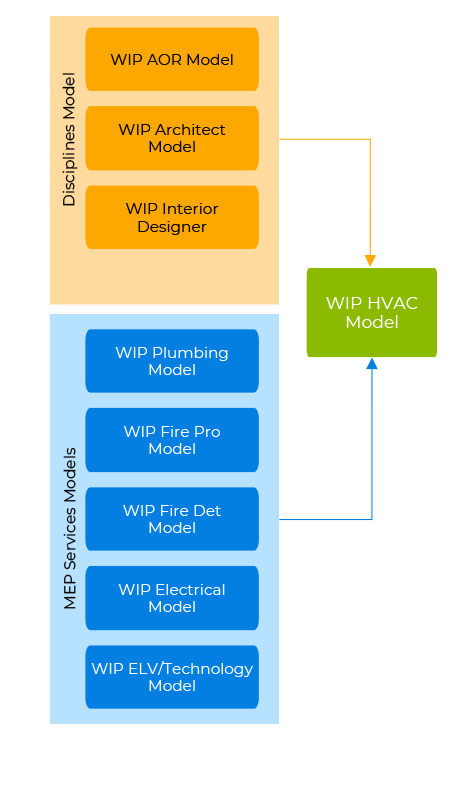
Developing a well-coordinated model for the Design Services systems will be achieved through an internal review process prior to coordination across all disciplines. Coordination will be achieved through utilizing two methodologies:
- Concurrent Coordination
- Internal Clash Detection
Key Personnel

Amber Haroon
Technical Director Digital Delivery
Amber is a highly driven Digital Delivery Director with extensive experience in developing and implementing Digital Engineering and BIM strategies for large multidisciplinary projects. She has strong expertise in international BIM standards, including ISO 19650-1, ISO 19650-2, and PAS 1192-5, along with advanced proficiency in information modelling, coordination tools, and digital collaboration platforms.
With hands-on technical knowledge in Civil Infrastructure and Master Planning projects, she specializes in establishing model coordination, design collaboration processes, and digital workflows that standardize and improve project delivery. Her work includes managing BIM standards, implementing CDE systems, and supporting digital transformation across projects.
Amber has delivered projects across the Middle East for government, semi-government, and private sector clients. She actively contributes to BIM governance, QA/QC, and project information management, while also leading training sessions and digital awareness programs to upskill teams.
She is a frequent participant and presenter at regional BIM and infrastructure conferences, demonstrating strong communication skills and a commitment to staying updated with emerging technologies and industry best practices.